

Clint George • April 1, 2026
A Humorous Look at Amazon’s Supercenter Innovation on this April Fools
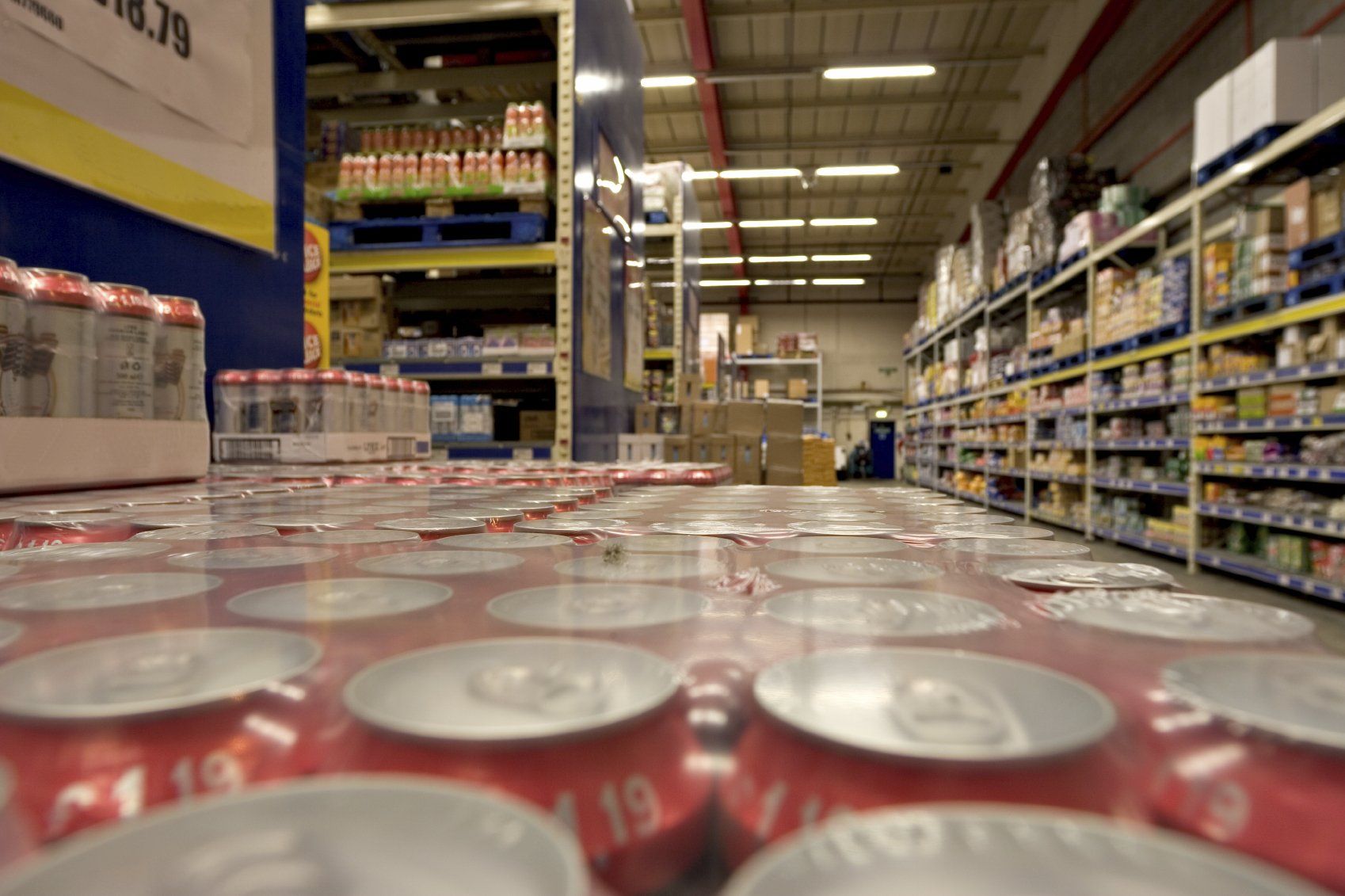
According to Business Insider, Amazon has decided it’s not enough to dominate your online shopping habits—it now wants to physically loom over you in a building the size of a small moon. Enter its latest grand plan: a Walmart-style supercenter that also moonlights as a robot-run warehouse. Because apparently, choosing between “store” and “giant robot brain” is so last decade.
Internally dubbed Project Kobe (no word on whether it also shoots three-pointers), this concept is one of Amazon’s boldest attempts yet to reinvent retail—or at least make it slightly more intimidating. The idea is simple: combine groceries, general merchandise, and a small army of robots into one mega-structure where you can shop, pick up orders, or have them delivered—all without ever escaping the building’s all-seeing algorithmic gaze.
Think Walmart Supercenter… but with more wires, more AI, and probably fewer confused employees asking if you’ve tried aisle 7.
The first of these mega-stores is planned for Orland Park near Chicago, with more locations lined up in New Jersey and Illinois. And if things go well, Amazon could roll out dozens more—because nothing says “subtle expansion” like building 225,000-square-foot retail fortresses across the country. On the surface, these stores look familiar: groceries, household goods, and that one aisle you didn’t mean to walk down but now can’t escape. But behind the scenes, it’s a different story. A huge chunk of the building is dedicated to automated storage, picking, and packaging—basically, robots doing CrossFit with your online orders. And Amazon isn’t thinking small. Each store could carry around 250,000 items—roughly double what a typical Walmart carries. So yes, you can finally buy bananas, a kayak, and a waffle maker in one trip… assuming the robots approve.
Of course, all this futuristic magic doesn’t come cheap. Internal estimates suggest it costs about 12% more to fulfill orders compared to Amazon’s already lightning-fast delivery network. Groceries are the real diva here—perishable items cost more to handle, partly because humans still have to walk over 500 feet to grab them. (Yes, even in the future, someone still has to go get the milk.) The Orland Park location alone is expected to cost about $33 million to build. That’s a lot of money, but hey—progress isn’t cheap, especially when it involves teaching robots how to find cereal.
There are also some concerns about scaling this model. As demand grows—especially for groceries—things could get more complicated and expensive. Turns out, even robots can’t completely fix the chaos of people panic-buying snacks.
This big push comes after Amazon’s somewhat bumpy history in physical retail. Its experiments with cashier-less stores and grocery chains have had mixed results, and even its $13.7 billion acquisition of Whole Foods hasn’t dramatically reshaped the grocery landscape. But if there’s one thing Amazon is known for, it’s persistence. And if that persistence results in a massive robot-powered superstore where you can buy toothpaste at the speed of light… well, at least shopping won’t be boring anymore.
Brand Focus Digital's
viewpoint:
The competitive landscape is intensifying, a development that aligns with industry expectations. These micro-fulfillment centers are poised to serve as localized hubs for processing e-commerce orders. Consequently, if a product is available at a store closer to the consumer than a regional fulfillment center, customers will likely be offered expedited click-and-collect or shipping options—potentially at a discounted rate. This raises a strategic question regarding Amazon's logistics pricing: whether they will apply a premium for shipping from more distant facilities, offer slower delivery tiers, or just keep things the same with more options. Regardless, the strategy yields a net positive by expanding consumer fulfillment options.
While Amazon has recently closed several of its Amazon Fresh brick-and-mortar locations, the company remains a top-five grocery retailer by sales volume (they are #4 as these figures include Whole Foods Market). Strategically expanding their physical retail footprint will only serve to enhance their market position.

Amazon’s AI now plays a bigger role in purchasing decisions than most brands realize. What you list, how you say it, and what customers say about you all feed the system deciding who gets seen—and who gets skipped. Amazon AI, now referred to as Cosmo , with it’s customer interface Rufus, now sits at the center of how shoppers discover and decide on products. For brands, this means every piece of content and data you provide isn’t just informing shoppers—it’s training the AI that decides whether you win the sale. And speaking of data, you'll surely be impressed with these numbers: 250 MILLION customers used Rufus in 2025 $10 BILLION in projected additional sales in 2026, prompted by Rufus 60% HIGHER propensity to convert when using Rufus Cosmo’s algorithm thrives on data. Customer interactions, product information, and signals from shoppers helps the system learn, predict, and decide which products get seen and which ones don’t. Understanding the forces that feed Cosmo and what actions they need to take is key for brands aiming to align their strategy with the AI, rather than just reacting to it. Cosmo's medium to high impacts include : Catalog Data (High Impact)- Ensure backend attributes such as color, size, flavor, scent, and other key fields are complete and accurate Customer Reviews (High Impact)- Rufus actively analyzes customer feedback to understand sentiment, product benefits, and real-world performance Listing Information (High Impact)- Rufus indexes titles, bullet points, product descriptions (including non-customer-facing fields), and images. This includes text on images and alt text (auto-generated by Amazon and heavily influenced by your title). Listings must be fully retail-ready Customer Q&A (Medium-High Impact)- Even though Q&A is no longer visible on product pages, Rufus references both current and historical customer questions and answers Customer Profile (Medium-High Impact)- Shopper behavior and past purchase history help Rufus personalize recommendations and responses Web Sources (Medium Impact)- Your brand website should reflect accurate product assortment, brand positioning, and product details to support AI understanding and discovery Amazon’s AI isn’t a future consideration, it’s already shaping how products are discovered and chosen. Brands that treat their data and content as AI inputs, not just shopper-facing assets, will be best positioned to win. Brand Focus Digital talent brings decades of experience working at and with Amazon (as well as other online retailers). In partnership, we deliver comprehensive solutions, including maximizing Cosmo/Rufus, to maximize profits for your brands. Contact us now to get the help that truly makes a difference.

According to U.S. Census Bureau, on average only 33% of B2B eCommerce companies in the United States have fully implemented AI in their operations while 47% say they are evaluating the technology. Furthermore, the impact of AI is contributing to the widened gap between consumer trust in companies and what companies perceive consumer trust. This gap is at an all-time high of 60%! Brand Focus Digital values and utilizes AI as an important tool to support sales and marketing strategies, but we value client and consumer trust even more. We understand that real connection and authenticity are important now more than ever. We scrutinize and validate AI in our work at every turn. For example, we use AI to explore concepts or prototype content for products but scrutinize and finalize the content for validity and authenticity. We also use AI tools through our advertising software during keyword suggestions to optimize campaigns. However, we use our brand management expertise to check and validate relevancy. Additionally, to understand brand competition, we utilize a multitude of tools, including AI, which help us analyze competition on Amazon, the global brand landscape, consumer preferences, and market trends. The menu of tools assist us with determining our target market, advertising tactics, and sales strategies. Client and Consumer trust is a valuable currency that Brand Focus Digital and the brands we manage must continuously strive to earn and maintain. We constantly build and maintain brands’ confidence by prioritizing transparency, authenticity, and accountability. By consistently delivering high touch, quality, and value, we ensure brands build and maintain trust and establish lasting relationships with consumers. In the era of distrust, brands that proactively address these issues will stand out as beacons of trust, gaining a competitive edge and fostering loyalty in the hearts and minds of their customers. We’ve been managing brands and helping them build trust with consumers for more than 10 years. We are former Amazon execs, ready to partner & grow your brands on Amazon (or Walmart, Target or 15 other platforms)! Our agency offers full-service or project-based digital marketing and brand management services. Connect with us today to learn how we can help take your brand to another level: clint@brandfocusdigital.com colleen@brandfocusdigital.com .

At Brand Focus Digital, an Amazon Brand Management agency, we hear this often:“ Why does Amazon agency pricing range from $1,500 to $20,000+ per month—and how do I know what’s worth it? ” The truth is, Amazon marketing is not one-size-fits-all. Pricing depends on the depth of services, the complexity of your business, and the results you expect. As your Amazon agency partner, we’re here to break down exactly what you’re investing in—and how to ensure it drives real growth. Why Work with an Amazon Management Agency? Choosing between in-house resources and an agency isn’t easy. But here’s what makes the agency model a better fit for many fast-scaling brands: Speed to Execution: We’ve built and refined systems that drive faster go-to-market timelines. Scalable Expertise: Our specialists bring Amazon-specific know-how from managing dozens—or even hundreds—of ASINs. Cost-Efficiency: Skip the cost of hiring, training, and managing a full team. We offer full-service support at a fraction of in-house overhead. For example, nearly 50% of our team being ex-Amazon (including our founder and VP, who led Vendor Management Programs at Amazon), we bring institutional knowledge that’s hard to replicate internally. Understanding Agency Pricing Structures: We offer multiple pricing models to fit your business stage, complexity, and goals:

Amazon frequently overcharges vendors on PO’s or shortage claims, for which we must provide extensive documentation, like BOL’s signed by shipper and receiver, invoices, pack lists, weights, images, etc. Often, Amazon only pays a portion of the shortage claim, if at all. We created an alliance that utilizes technology, created by former Amazon accounting experts, that reviews previous PO’s, shortage claims and reconciling invoices, investigating possible funds that were “left on the table”. The investigation includes a comprehensive, no-cost audit, that includes dollars recovered on your behalf. The program usually has a recovery rate of 95-100% once cost amounts are identified. The great news is that you are only charged if funds (as far back as 18 months) are successfully recovered, which is 30% of the amount paid back from Amazon. One client with sales of $2.3M in shipped COGS, had the audit reveal over $745K in invoice reconciliations. The entire process typically takes 4-6 weeks from beginning to receiving payment on recovered funds! Contact us today! We work with brands as full-service management or project based to meet your business needs!

Discover why content is so important in winning the digital shelf for brands. The infograph provides a snapshot of results impacted by best in class content.

Brands that promote on Amazon will see a change in fees for coupons, lightning deals, and best deals starting June 2nd. There are benefits to brands given the fee structure is more based on performance than the flat fixed fees. But, if the promotion performs well, plan to fund a higher amount. Brand Focus Digital has seasoned experts at managing Amazon, its constant changes, and can help with: Reviewing your current strategy to understand where and how you may need to pivot Implementing brand tailored promotion segments Evaluating assortment to see if lower pack sizes and lower ASP items are an option and profitable After June 2, 2025, be aware that: Coupons have a $5 flat fee per coupon Coupons have a variable 2.5% redemption fee These fees are separate from your Coupon budget, which fund the actual customer discounts Products that are priced higher than $20 retail will be impacted most Below is a cost comparison we formulated of Higher Retail Product vs. Lower Retail Product:

Launched today, episode 172 of the E-Comm Show features our very own leaders of Brand Focus Digital. Clint George (CEO) and Colleen Caso (VP) provide insider insights to manage Amazon right! What sets Brand Focus Digital apart from its competitors is that both Clint and Colleen are ex-Amazon managers, giving them insider experience, knowledge, and expertise. Andrew Maff of the E-Comm Show hosts an in-depth interview with Clint George and Colleen Caso so that together they pull the curtain back on what selling on Amazon successfully looks like. Enjoy the full episode here or on one of your favorite platforms: YouTube , Spotify , Apple Podcasts , Amazon Music , Stitcher Email clint@brandfocusdigital.com or colleen@brandfocusdigital.com today to learn more how we can grow your Amazon, e-Commerce business now. --------------------------------------------------------------------------------------------------------------------------------------------------------------------------------------- Brand Focus Digital helps manufacturers sell their products easier and more efficiently on Amazon and other online retailers - in North America and across the globe. We work tirelessly and diligently with the makers of (and not limited to): • Food products • Pet related merchandise • Health and Beauty products • Outdoor gear BFD’s talent has decades of experience working at Amazon as well as other online retailers. In partnership, we deliver comprehensive solutions to maximize profits for your brands. Contact us now to get the help that truly makes a difference.

A new full-funnel Amazon strategy, Amazon Marketing Cloud , is now available for all advertisers! And, only available through approved partners like Brand Focus Digital. Amazon is much more than a shopping site! Between Twitch, Prime Video and live sports, Amazon is engaging shoppers in many ways. The only way to truly unify all those touchpoints is Amazon Marketing Cloud (AMC). AMC is an enhanced advertising data-gathering platform for current Advertising campaigns on Amazon. It allows advertisers to dig deeper into their marketing and audience data. For example, gain the ability to uncover critical marketing functions like consumer purchase journeys, overlap analyses, and new-to-brand acquisition. Advertisers who wait on AMC are going to miss out. First-party signals are the future. Amazon’s data is rich—but ultimately incomplete. To get a truly holistic understanding of your shoppers, you need to tie your first-party signals (in a privacy-safe way) to AMC. Adding 1P signals, according to our Amazon reps, is when you can “start to scale these audiences much further than what you're able to do if you just look at the signals that Amazon's providing.” Previously only available for DSP advertisers, AMC is now available for all advertising campaigns, and through an affiliated partner, like Brand Focus Digital. Brand Focus Digital has the access and expertise needed to gather, analyze and interpret the data for you. Contact us to get started immediately to enhance your advertising strategies today.

Sales on Amazon trending down or staying flat? Unsure how to navigate the newest FBA changes from Amazon? We’re offering a complimentary Brand Health Audit for Amazon in celebration of our 9-year anniversary! Take advantage of Brand Focus Digital’s offer which includes a comprehensive, no fuss, complimentary audit of your current brand on Amazon to help position it for better success in the future. Audit includes: Item detail pages 3P sellers Buy Box issues Pricing strategy and Profitability Brand Store/A+ and Content SEO and optimization Advertising and Promotional strategy, and much more. Email today for more information or to take advantage of this opportunity! Brand Focus Digital is also excited to be attending Unboxed next week in Austin. We’d love to meet up if you’re attending! Let us know!

Last week our leader, Clint George, spent time with Amazon and the Buy with Prime team! Not only was he engaged with the BwP Amazon team, he learned about cutting edge products and programs launching this week that help us help manufacturers like you! Amazon Today! A program that offers same-day delivery and in-store pickup from your retail locations. A unique opportunity to market your in-store selection on Amazon.com and offer same-day delivery or in-store pickup in a few hours from your store to millions of customers. Amazon Warehousing & Distribution - (AWD) Utilize Amazon as a 3PL warehouse to ship products from where they are manufactured in bulk (like Taiwan or another country) to the US, but directly into Amazon rather than another US based warehouse. Amazon Multi Channel Fulfillment - (MCF) a program where Amazon ships to customers that purchase from other websites like Etsy or Ebay for example. The shipment can be put in an unmarked box, so it doesn't appear to the customer that it’s coming from Amazon. Let’s talk today about how these programs can benefit you, your sales, and ROI! Learn more: https://www.brandfocusdigital.com/